section 1.0
Introduction
Loading…
1.0

Introduction

This Official Community Plan Bylaw (OCP) is a comprehensive policy document that outlines the long-term vision for growth and development within Dawson City (Dawson) and provides direction on how Dawson should develop in a way that reflects the values and priorities of its residents and governments. It establishes the community’s goals, directions, and land use policies to guide decision-making on planning and development matters.

1.1

Purpose of the Official Community Plan

The purpose of the Official Community Plan is to act as a guiding legislative document that provides a clear framework for development, ensuring that Dawson’s future growth aligns with the community’s goals. This OCP includes objectives and policies that influence decision – making regarding land use, housing, transportation, infrastructure, environmental protection and community services. The Official Community Plan works in conjunction with the City of Dawson Zoning Bylaw (ZBL) and the Yukon Municipal Act (the Act).

In compliance with Section 279 of the Municipal Act, all future decisions and activities of the City of Dawson Council (Council) shall, to the extent practicable, be consistent with the goals and policies outlined in this OCP, including those related to land use, municipal services and facilities, environmental stewardship, utilities and transportation systems, and the ongoing review and implementation of the OCP and ZBL. In the event of changing circumstances, including, but not limited to, population growth, housing demand, and public interest, Council shall review and, where necessary, revise the policies and/or land use designations established in this OCP by amending the bylaw in accordance with the Act.

It must be acknowledged that implementation of the community’s vision, and achievement of the OCP’s goals will be a collaborative effort realized through programs, projects and decision-making undertaken both by the City as well as other levels of government, the business community, local industries, developers, and individual residents. Ideas and directions included in the OCP are intended to provide an overview of local priorities and give all parties and people who may read the OCP a deeper understanding of what people would like to see Dawson be in the future, allowing them the opportunity to make complementary decisions, collectively supporting Dawson’s shared vision.

1.2

Content

Adopting an OCP is a requirement under the Yukon Municipal Act, and it must be adopted by bylaw. The Act establishes the type of content the OCP must include and the process to develop or amend an OCP. The required content of an OCP is outlined in Section 279 of the Yukon Municipal Act, which states:

  1. An official community plan must address:
      1. the future development and use of land in the municipality;
      2. the provision of municipal services and facilities;
      3. environmental matters in the municipality;
      4. the development of utility and transportation systems; and
      5. provisions for the regular review of the official community plan and zoning bylaw with each review to be held within a reasonable period of time.
  2. An official community plan may address any other matter the council considers necessary.
1.2.1 Timeline and Scope

The vision and guidance of the City of Dawson 2025 OCP are intended to extend out for approximately 20 years; however, as described in Section 16.3 Review and Amendments, a comprehensive review is expected to occur after approximately 10 years or as otherwise directed by Council.

1.3

Relationship with Other Plans

The OCP is intended to illustrate the overall vision of Dawson and provide general direction for future growth. In addition to guiding Council’s decisions, the OCP informs other municipal planning documents and development processes, such as bylaws relating to zoning, subdivision, or heritage management.

Whereas the OCP sets out broad land use guidelines for different areas in the municipal boundary, the Zoning Bylaw is the primary regulatory tool for implementation, prescribing permitted uses, densities, building setbacks, parking, landscaping, and other standards.

While the OCP focuses on land located within the municipal boundary, other plans also influence development, including but not limited to the West Dawson & Sunnydale Local Area Plan, Our Clean Future, and the Tr’ondëk-Klondike UNESCO World Heritage Site.

1.4

OCP Creation Process

The creation of this OCP spanned from mid-2024 to late-2025 and involved engagement with community members, representatives from impacted and interested parties in the community, and other governments. To guide the project process, a Working Group was created with representatives from the Government of Yukon and Tr’ondëk Hwëch’in Government. In addition, an Advisory Committee, comprised of volunteers from the community, was used to gain insight into local needs and preferences at key times throughout the process.

2.1

Overview

Dawson is an eclectic, inclusive, and welcoming community that proudly embodies both Tr’ondëk Hwëch’in culture and the rich history of the Klondike Gold Rush. It is a vibrant place where diversity thrives, and residents are “in it together” – chipping in to help and support one another through what can be very harsh and long winters. With its picturesque landscapes, surrounding wilderness, and a bustling arts and culture scene, Dawson tends to attract those who lead artistic or outdoor lifestyles. Though typically known as a seasonal tourist destination, Dawson’s year-round events contribute to the tight-knit and lively social lives of those who make the community their full-time home. The call of the wild has drawn adventurers to Dawson

for decades, resulting in a population that is a unique blend of old-timers, new-timers, miners, entrepreneurs, artists, and explorers, making it a dynamic and engaging place to live.

2.2

Economic Sectors

Dawson acts as a regional hub, supporting surrounding communities and seasonal industries. The economy is shaped by Dawson’s role as a hub for government, tourism, mining, and the arts. Based on 2021 Statistics Canada employment numbers, the leading economic sectors in Dawson are:

  • Public administration

  • Accommodation and food service

  • Health care and social assistance

  • Arts, Entertainment, and Recreation
  • Construction

  • Education services

  • Mining

  • Retail trade

Education Services

The prominence of jobs in accommodation and food services; mining; and arts, entertainment,

and recreation is significantly higher in Dawson than typically seen across Canada and has a direct impact on Dawson’s demographic profile, as these industries tend to have younger

workforces. These industries also influence the overall culture of the community in a variety of ways, one of which is by bringing in new employees annually from across the world, increasing Dawson’s diversity. Further, the annual influx of seasonal employees that support Dawson’s Tourism and Mining sectors exacerbates the demand for housing. These industries rely heavily on outside employees to sustain the summer economy.


2.2.1 Public Administration

Public administration is the primary economic sector in Dawson, with a strong presence of multiple different governments in Dawson, including the City of Dawson, Tr’ondëk Hwëch’in Government, the Government of Yukon, and the Government of Canada. The Tr’ondëk Hwëch’in Government is the largest single employer in Dawson, providing a wide range of services to its citizens and programming much of which is open to all members of the community.

To coordinate governmental efforts and reflect a mutual commitment to collaboration, the City has signed a Memorandum of Understanding with Tr’ondëk Hwëch’in Government.

The Government of Yukon also employs a variety of professionals throughout the community via different departments, including those associated with health and education. The Government of Canada is present through the large role Parks Canada plays in tourism and land holdings.

Yukon University provides a variety of in-person and virtual education opportunities to students.

As part of its approach to growing Dawson as a regional campus, Yukon University works closely with the Tr’ondëk Hwëch’in Government and community partners to share resources and tailor programming to reflect local priorities and emerging employment opportunities. In addition to skilled trades and industry-related training such as welding, heavy-duty mechanics, carpentry, and truck

driver training, Yukon University offers a broad range of programs including land-based learning, safety certification, bridging and upgrading courses, and pathways to further education, reflecting the community’s commitment to cultural knowledge, environmental stewardship, and diverse economic development.


2.2.2 Culture and Tourism

Culture and tourism are cornerstones of Dawson’s identity and economy, shaping both community life and Dawson’s global appeal. Recognized as a World Heritage site through inscription to UNESCO’s World Heritage List and National Historic Site of Canada, visitors from around the world are drawn to Dawson’s diverse experiences, from engaging meaningfully with Tr’ondëk Hwëch’in culture, learning about Klondike Gold Rush history, and exploring the natural beauty of the Yukon.

The legacy of the Gold Rush remains visible in the surrounding goldfields, riverfront, and preserved historic buildings that combine to tell the story of the Klondike. Visitors can explore historic sites, experience the charm of Dawson’s downtown, or take part in iconic local experiences and outdoor adventures. Adventurers travel the Top of the World Highway or visit Tombstone Territorial Park, often described as the Patagonia of the North, where dramatic mountain landscapes, rich ecology, and cultural interpretation programs highlight the Yukon’s beauty and ecological significance. The community’s welcoming spirit, the magic of the midnight sun, and the northern lights visible from its dark-sky surroundings create a sense of wonder that connects residents and visitors alike.

Beyond its history, Dawson’s cultural vibrancy shines through festivals, performances, storytelling, and community celebrations throughout the year. Tourism is sustained by a network of dedicated community partners, grassroots organizations, and cultural institutions that host events, manage attractions, and create experiences that enrich life for residents and visitors. Residents continue to contribute to carrying on the cultural and historic traditions that are emblematic of the region.

2.2.3 Arts

The arts community in Dawson is a dynamic and evolving expression of the community’s identity, encompassing contributions from long-term residents, recent arrivals, and Indigenous artists whose work reflects deep cultural traditions alongside contemporary creative practices inspired by life in the North. The arts and cultural sector flourishes with jobs for projectionists, sound and lighting technicians, front-of-house staff, and instructors who work with local artists to fuel a thriving arts-based economy, selling their work at markets, festivals, and holiday craft fairs, teaching workshops, and exhibiting at galleries and pop-up events. Artists also support each other’s projects through shared spaces, events, and informal mentorship.

The Klondike Institute of Art & Culture (KIAC), and Dawson City Music Festival Association play a huge role in supporting these opportunities, hosting everything from the Dawson International Short Film Festival to the Yukon Riverside Arts Festival, as well as offering workshops, gallery space, residencies, and performance opportunities for both local and national artists.

The Yukon School of Visual Arts (YSOVA) brings in young artists and teachers, many of whom fall in love with Dawson and stay, further strengthening and enriching the local arts sector.

Indigenous artists are central to this story, with many showcasing and selling their work at the Dänojà Zho Cultural Centre gift shop, sharing culture, history, and artistry with visitors and locals alike. Together, tourism, arts, and cultural activity reinforce Dawson’s identity as the cultural capital of Yukon.


2.2.4 Education

Yukon University (YukonU) maintains a regional campus in Dawson City and serves as a key post-secondary institution for residents of Dawson and the surrounding region. Tr’ondëk Hwëch’in plays a key role in supporting community program development at YukonU, like the various health and wellness programs, culture and conservation (Wilderness First Aid, Hän Language, and Conflict Resolution) programs. Land and culture-based learning is further enriched through Tr’ondëk Hwëch’in Cultural Camps and collaborative programming in partnership with the Tr’ondëk Hwëch’in Farm.

Educational institutions like YukonU also contribute to students looking for summer jobs to Dawson’s seasonal workforce. Each summer, student employees come to work in Dawson, adding to the seasonal population growth from May to September. With tourism being a cornerstone of Dawson’s economy, ensuring sufficient and suitable accommodation for these seasonal workers is essential to maintaining the vitality of the industry.

2.2.5 Accommodations

Dawson City offers a diverse range of accommodations for both visitors and temporary residents. Options include campgrounds, rustic cabins, historic hotels, bed and breakfasts, and boutique lodgings, many of which reflect the town’s eclectic and historic character. Beyond seasonal needs, housing support is also available for vulnerable residents. Tr’ondëk Hwëch’in’s Jëje Zho (men’s shelter) provides safe accommodations for men experiencing homelessness. The Jëje Zho includes eight residential units with fourteen beds offering supportive living, outreach services and emergency shelter beds.

2.2.6 Food Services

Despite its small size, Dawson boasts a vibrant culinary and retail scene. Visitors and residents enjoy a variety of food experiences, with restaurants offering locally sourced meals and beverages. Many establishments feature patios for soaking in the long summer daylight while enjoying scenic views and Dawson’s unique atmosphere.

2.2.7 Mining

Mineral development is a component of Dawson’s economy and heritage, with two distinct forms of mining occurring in the area: placer mining, which recovers gold from historic or active streambeds, and quartz (hard-rock) mining, which extracts mineralized rock from open-pit or underground sites.

The OCP recognizes both benefits and risks of mineral development on Dawson, noting the environmental and cultural relationships of the region and the need for activities to align with community goals and values. Consistent with this Plan, the City supports responsible mineral activity that avoids and mitigates impacts to waterways, habitat, culturally important places, and heritage resources; respects Tr’ondëk Hwëch’in rights and values through early and ongoing engagement and Consultation; plans for closure and reclamation; and coexists with other community priorities, including housing, infrastructure, tourism, and overall quality of life. This balanced approach recognizes mining’s economic role while prioritizing environmental stewardship, cultural well-being, and Dawson’s long-term resilience.

2.3

Population

Planning for Dawson’s future requires understanding who lives here, why they choose to stay, and why some choose to leave.

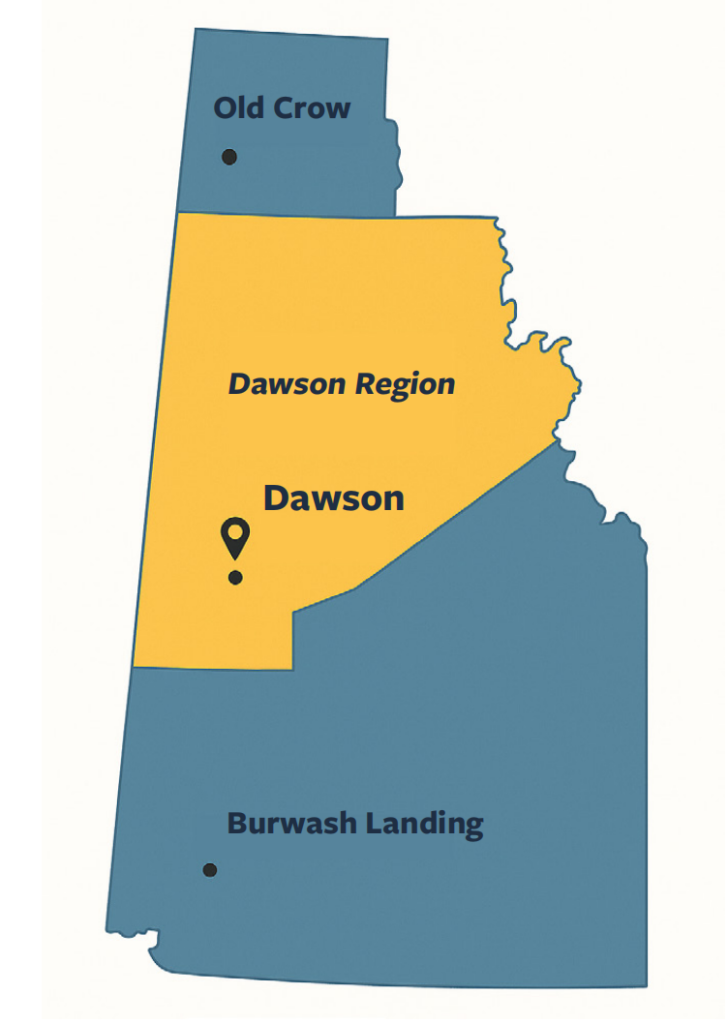
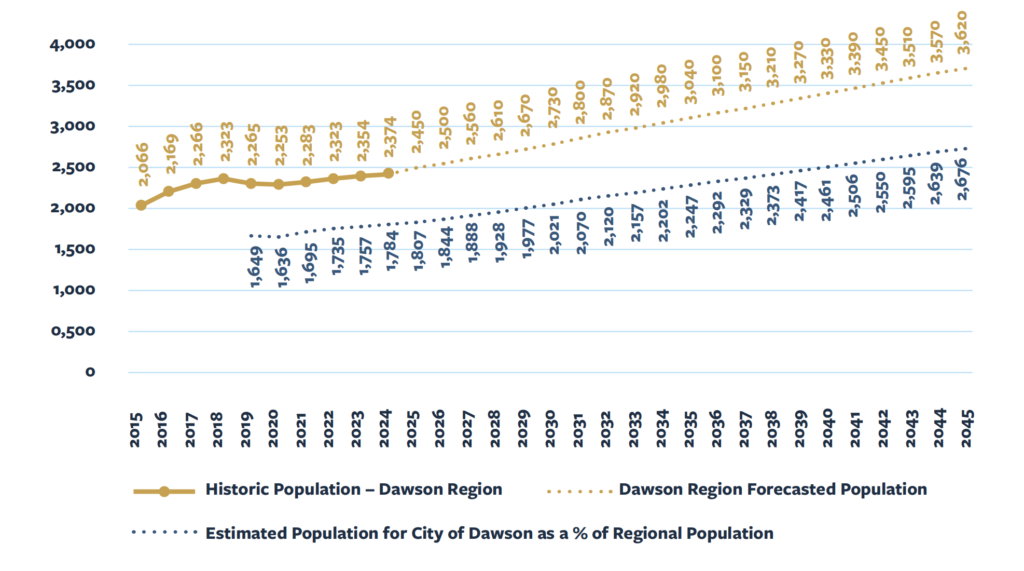
Dawson’s population is tracked by both the Yukon Bureau of Statistics (YBS) and Statistics Canada. YBS provides more accurate numbers due to a higher response rate, but tracks only at a regional scale (see Figure 1), while Statistics Canada reports for smaller-scale census subdivisions, but with a much lower response rate. Using a comparison of the information available from the Yukon Bureau of Statistics and recent Statistics Canada population estimates for 2019 to 2023, it was estimated that Dawson’s population accounts for around 75% of that recorded for the Dawson Region, which would suggest Dawson’s population in 2024 was around 1,781. As shown in Figure 2, the Dawson Region has seen growth and regression over the last decade.

It is also important to note that seasonal workers, who significantly increase Dawson’s population in summer, are not fully captured in official counts. Anecdotal evidence suggests that the summer population nearly doubles.


2.3.1 Age Profile

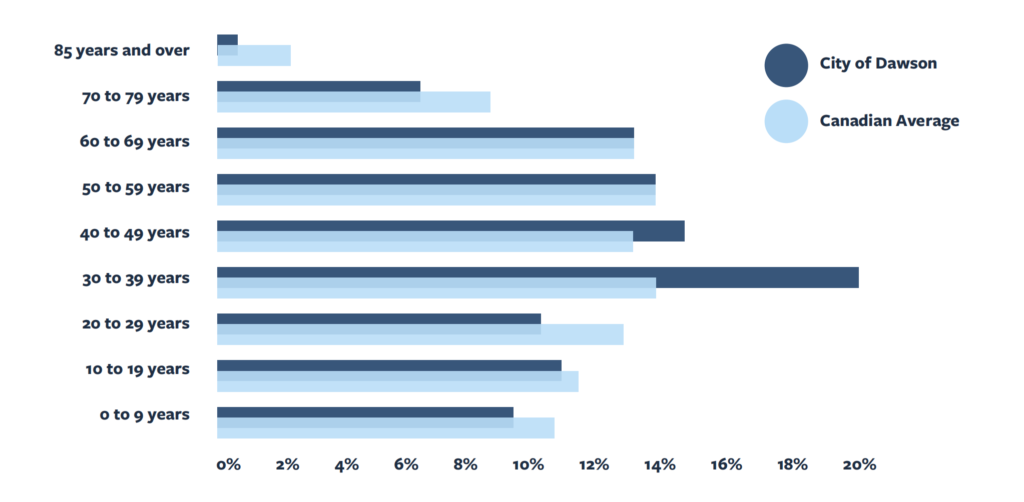
Dawson’s age profile shows its population is slightly older than that of the Yukon, with an average age of 40.5 compared to Yukon’s 39.9; but both are less than the Canadian average of 41.9. Dawson also has slightly more men than women when compared to both Yukon and Canada.

Figure 2

Age groupings as percentage of total population City of Dawson and Canadian Average (Statistics Canada, 2021)

2.3.2 Young Adults

As illustrated by Figure 2, a clear feature of Dawson’s demography is its relatively high population of working-age residents (aged 15 – 65), particularly those in their 30s. This is a trend for Dawson as the community tends to attract young adults; anecdotally, those migrating to Dawson seek adventure and a unique experience. These individuals, particularly those in their late 20s and early 30s, have a high potential to settle long-term and start families, as is seen elsewhere across Canada, which would generally round out the age profile. In Dawson, however, young children associated with the large numbers of residents in child-rearing age brackets are under-represented, which suggests that young adults are coming to Dawson and either not having children or are leaving after they have them, at a higher rate than elsewhere in Canada.

Population decline in rural communities across Canada is often driven by out-migration, particularly among young adults who tend to relocate to urban centres. In Dawson, the motivations behind this trend may vary, with anecdotal reasons including the pursuit of more affordable or diverse housing options, career development opportunities, or access to family-oriented services such as childcare, youth sports, and recreational programs. A key consequence of this demographic shift is the notably low number of young children remaining in the community.

2.3.3 Seniors

The number of seniors in Dawson is also lower than average at 14.9% of the population, compared to Yukon’s average of 15% and Canada’s average of 19%. Out-migration of seniors is common for small, particularly remote communities. Although causes may vary, anecdotal reasons usually include a desire to be closer to children who have moved elsewhere, be closer to other family members, take advantage of different housing options, or have more convenient access to healthcare needs.

2.3.4 Growth Projections and Trends

Assuming the proportion of Dawson’s population within the larger Dawson Region will carry into the future, the Yukon Bureau of Statistics’ future population estimates suggest Dawson will grow from 1,784 (2024) current residents to 2,676 by 2045, as shown below in Figure 3, which is 54.7% (2.0% annually).

Based on the historic and projected population profile of Dawson, the demography of the community tends to remain relatively unchanged, meaning the community will continue to see an over-representation of young adults with lower proportions of seniors and young children.

Figure 3: Dawson City population projection based on regional growth projections, 2024 to 2045 (Yukon Bureau of Statistics, 2024).


2.4

Accommodating Growth

2.4.1 Land Development Context

Although Dawson City’s municipal boundary is quite large, there is limited developable land available. During the last OCP update in 2018, undeveloped lands previously designated as Parks and Natural Space were reviewed at a desktop level and identified as “Future Planning Areas”. These areas represented potential spaces where residential and other uses could be accommodated, but would require additional work to determine their suitability. To advance this work, the Government of Yukon commissioned a feasibility study in 2024 titled Physical Land Development Constraints Mapping. This study assessed lands within and adjacent to the municipal boundary, categorizing them based on topography and soil conditions. The results indicate that only a small number of undeveloped areas are suitable for future development. The results of that study have been used to influence the land use concept shown in Schedule B Land Use Map (Valley, Confluence, and Bowl) and Schedule C Land Use Map (Historic Townsite).

To complement future development opportunities, it is essential to also prioritize the redevelopment and densification of existing areas. This approach must reflect and respect the collective values of Dawson residents, including Tr’ondëk Hwëch’in’s vision for their traditional territory and Settlement Land. Environmental stewardship is central to growth planning, requiring that ecological considerations remain at the forefront of land development decisions. Stewardship should be a collaborative effort, ensuring that environmental policies and practices are cohesive, culturally sensitive, and community-informed. When evaluating the potential for additional development in existing areas, municipal servicing reviews will be necessary to confirm that water, sanitary, and stormwater systems are adequately sized and coordinated with energy and telecommunications providers.

2.4.2 Residential Land

Residential land in Dawson is distributed throughout the community with concentrations primarily located in the Historic Townsite and north of the Klondike Highway in the Valley, Confluence, and Bowl area. In total, there are approximately 422 hectares of residential land identified in Dawson, with a total of 770 dwelling units as recorded by Statistics Canada in 2021. Of these, 545 units (71%) were categorized as single-detached houses. The predominant housing form is single-detached dwellings, with an average household size of 2 people per dwelling. Dawson has more semi-detached (duplex) dwellings and apartments than the Yukon average, but fewer mobile dwellings than the Yukon average. There are also several residences located across the Yukon River in West Dawson and Sunnydale, very few of which are within the municipal boundary.

As anecdotally described by community members and detailed in the 2024 HART Community Housing Report: Dawson City and Section 7.0 Housing, the existing housing needs of Dawson residents are not currently being met for a variety of reasons, including cost of housing, limited and aging housing stock, and low availability of developable lands to accommodate new housing builds.

Using the projected population growth described in Section 2.3.4 Growth Projections and Trends, it can be anticipated that an additional 346 dwelling units will be required in Dawson by 2041.

This number is a result of the average annual population growth rate of approximately 2.13% and the current household size of 2 people per dwelling. To accommodate all these dwelling units as single-detached dwellings, at an average lot size of 465 m2 as is currently seen in the Historic Townsite, an additional 16-20 hectares of serviced residential land will be needed. To accommodate all the anticipated dwelling units needed as unserviced acreage-style lots, at an average lot size of 1 hectare, as is currently seen outside of the Historic Townsite, an additional 416 hectares of unserviced residential land would be needed.

However, as outlined in the Housing Needs Report, Dawson residents need all different types of housing, not just single-family detached residences. 24% of the housing provided in Dawson is considered ‘core housing need’, which is when a household lives in an unaffordable, inadequate, or unsuitable housing. To reflect the diverse needs of existing and future residents, this OCP calls for a range of housing options, which will require both serviced and unserviced lands.

Using the feasibility work prepared by YG, as discussed in Section 5.0 Development Concept, additional residential land has been added to Dawson’s land use concept as part of this OCP update. In addition to identifying new areas for future residential development, utilizing existing areas that are undeveloped or underdeveloped will also contribute to alleviating Dawson’s residential land pressures.

2.4.3 Commercial and Industrial Lands

Economic development efforts are coordinated through partnerships like the Klondike Development Organization (KDO), which includes the City of Dawson, Tr’ondëk Hwëch’in and other local stakeholders. By fostering innovation, entrepreneurship, and inclusive economic strategies, Dawson aims to build a resilient economy that reflects the community’s heritage and aspirations.

A thriving economy also relies on the availability and suitable mixture of employment lands to support growth in key sectors. As a primarily administrative and service-based community, many of the employment lands in Dawson are in the Historic Townsite, particularly in the Downtown Core, where they are centralized and easily accessible to visitors; however, a variety of other types of employment lands are also required for the community, such as those associated with non-customer-based commercial and industrial endeavours.

In total, there are approximately 590 hectares of commercial and industrial land identified in Dawson. Commercial lands in Dawson are generally located in the Historic Townsite, with retail and service-based businesses focused in the Downtown. As outlined in the Klondike Development Organization’s 2022 Commercial and Industrial Lot Need Indicators report, the number of vacant commercial lots in the Historic Townsite declined from 43 in 2018 to 33 in 2022. Many are not market-ready – about nine are owned by the Government of Yukon and about five by the City of Dawson – so acquisition can be challenging despite flexible commercial zoning. Although a detailed land demand study has not been completed, available indicators and survey feedback suggest additional commercial and industrial land may be needed to support future growth, and that selectively integrating residential uses in these zones could help meet needs if potential land-use conflicts are carefully managed.

Industrial lands in Dawson are primarily situated outside the Historic Townsite, extending along and branching off the Klondike Highway. These areas have historically supported, and continue to support, mining-related activities. While formal mining claims seldom overlap with surveyed industrial lands within the municipal boundary, many local industrial businesses are closely tied to the mining sector. Given the high cost of land in Dawson and the limited availability of housing options, many owners of industrial land have chosen to live on the same property as their business, creating an interesting mix of industrial and residential uses.

3.0

Community Vision

Dawson is a welcoming, supportive, and year-round community grounded in the shared history and living culture of Tr’ondëk Hwëch’in and the legacies of the Klondike Gold Rush. We celebrate heritage in genuine and balanced ways while fostering reconciliation, inclusion, and belonging. Our eclectic built environment, thriving arts and culture scene, and strong connections to wilderness define a distinctive sense of place. We envision a resilient, healthy town where people of all ages can live, learn, work, and play; where housing is attainable; where the local economy supports good livelihoods; and where environmental stewardship guides growth so that our character and natural setting are sustained for generations.

4.0

Guiding Principles and Key Directions

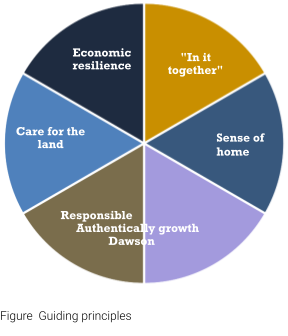
The following guiding principles shall provide the framework for the realization of the OCP’s vision, goals, and policies. Key directions are provided under each principle to support its implementation.

4.1

In it Together

  • Collaborate with Tr’ondëk Hwëch’in to create a caring, inclusive, and balanced community.
  • Create and maintain supportive partnerships.
  • Engage residents and create situations that support shared community experiences.
  • Make open, transparent, and respectful decisions.

Figure 4: Guiding pronciples

4.2

Sense of Home

  • Create a complete, year-round community.
  • Encourage housing types that meet the diverse needs of all residents.
  • Recognize the unique needs of seasonal residents.
  • Encourage healthy and active lifestyles that support physical, mental, and social well-being.
  • Promote inclusion for residents and visitors of all ages and abilities.
  • Remove barriers to support aging in place.
4.3

Authentically Dawson

  • Celebrate Dawson’s multi-faceted heritage, history, and culture.
  • Maintain an eclectic aesthetic that showcases the community’s shared story.
  • Respect and welcome diversity.
  • Promote opportunities and solutions that are authentic to our local situation.
  • Promote artistic, remote, and outdoor lifestyles.
4.4

Responsible Growth

  • Continue working with the Government of Yukon, other developers, and land owners to identify areas suitable for future development.
  • Use climate science and risk assessment processes to identify and map hazards, vulnerabilities and risks.
  • Use comprehensive planning and development practices to identify optimal land-use patterns and direct growth to safe and suitable areas of the community.
  • Prioritize housing as a key need in the community.
  • Prioritize redevelopment of vacant and underutilized lots.
  • Invest in efficient municipal infrastructure.
  • Enhance emergency preparedness and mitigate environmental hazards.
  • Support TH in the development of Settlement Lands to create new residential and commercial opportunities.
4.5

Care for the Land

  • Acknowledge the interconnected nature of humans with the land.
  • Promote ecological integrity to protect and respect the natural environment.
  • Explore how a changing climate will impact flora, fauna, and human health.
  • Protect major waterways and habitat for fish and wildlife.
  • Support a healthy ecosystem and biodiversity as the source of health and well-being for all residents.
  • Protect and maintain cultural connectivity to the land.
4.6

Economic Resilience

  • Work with local economic partners to collaborate and achieve mutually beneficial goals.
  • Support a strong and diverse economy.
  • Support opportunities that may help extend the tourist season and timeframe of other seasonal businesses.
  • Identify, protect, and encourage the development of supportive services that key economic sectors need to succeed.
  • Encourage opportunities for local employment.
  • Support the development of local skills and knowledge for residents of all ages.
5.0

Development Concept

Future development in Dawson is constrained by limited vacant lot availability, suitability of undeveloped lands, servicing capacity, and existing placer mining claims. Most of the land located in the Historic Townsite is developed and fully serviced through municipal infrastructure, with lot layouts reflecting historic surveys completed in the late 1890s. Outside of the Historic Townsite is the Valley, Confluence, and Bowl area, as shown on Schedule B Land Use Map (Valley, Confluence, and Bowl), which has limited municipal servicing. In this area, south of the Klondike Highway, there are a variety of industrial uses, supplemented with residences that are primarily occupied by the owners or operators of the businesses on-site. Along the Klondike Highway, the placer mining technique known as gold dredging has left a visual mark on the landscape, which is further evidence of the Gold Rush. Due to the significant extent of remaining dredge ponds in this area, development areas are limited. Moving north, up Dome Road outside of the valley, there are a variety of acreage-style residences.

Within the Historic Townsite, there are many historic buildings from the Gold Rush era being used for a variety of purposes. The appearance of these buildings, many of which have undergone renovation and demand continued ongoing maintenance to upkeep, greatly contributes to the overall character of the community and heritage of Dawson. Although many of the old buildings have been well-kept, many have fallen into a state of disrepair. Architectural guidelines intended to help preserve Dawson’s history and ongoing character place high requirements for building renovations, redevelopment, and new development. In addition, permafrost melt threatens the structural integrity of all buildings in the community, which makes the feasibility of new construction difficult and expensive. These challenges are seen throughout Dawson with many properties having derelict or abandoned buildings, and there being several empty, privately held lots despite the high demand for developable land.

As further described in Section 6.8 Tr’ondëk Hwëch’in Settlement Land, development on Settlement Lands throughout the community has been increasing over the past several years and is beginning to change the architectural landscape of the community, specifically as major non residential buildings on Settlement Lands are being constructed with architectural elements that reflect TH culture and heritage rather than Gold Rush styles.

5.1

Long-Term Goals

  1. Lands are used efficiently to support both private and public needs.
  2. Growth is directed to safe and suitable locations to create a complete, compact, and connected community form.
  3. Development conforms with the requirements of the Zoning Bylaw.
  4. A context-appropriate mix of residential, commercial, institutional, and industrial uses strengthens neighbourhood vitality and minimizes land-use conflicts.
  5. Development considers environmental, servicing and infrastructure constraints and prioritizes safety, accessibility and usability.
  6. Environmentally sensitive areas, ecological corridors, and lands with high cultural or heritage significance are protected and provide an opportunity for continuing land-based educational opportunities.
  7. The projected impacts of a changing climate are understood and considered in determining future development opportunities.
  8. Pedestrian accessibility and safety are enhanced through monitoring and maintenance of pedestrian walkways, ramps and boardwalks to identify opportunities to add street-level ramps and connect existing boardwalks.
  9. The sovereignty of TH Settlement Lands is protected.
5.2

Implementation Approaches

Guiding Precipices

IT
In it Together
SH
Sense of Home
AD
Authentically Dawson
RG
Responsible Growth
CL
Care for the Land
ER
Economic Resilience

Strategic Planning & Assessment

1

Direct future developments to the areas conceptually shown on Schedule B Land Use Map (Valley, Confluence, and Bowl) and Schedule C Land Use Map (Historic Townsite).

RG
2

Consider using Direct Control Districts to accommodate mining operations while requiring mitigation tools that lessen or avoid potentially negative impacts to surrounding users.

IT
AD
RG
CL
ER
3

Locate essential services and customer-focused commercial businesses in the Downtown to maintain a strong sense of community and promote walkability.

SH
AD
RG
CL
4

Avoid development, or apply appropriate mitigation techniques and approaches, in areas that may be subject to natural hazards such as flooding and geohazards.

RG
CL
ER
5

Consider the impacts of climate change on permafrost and the landscape when permitting new structures.

AD
RG
ER
6

Require new developments to consider stormwater management techniques that utilize climate change projections, to reduce the potential for erosion and watercourse pollution.

RG
CL
7

Require a professional geotechnical assessment for any construction in areas with low development feasibility, as shown in the Physical Land Development Constraints Mapping report prepared by YG (2024).

RG
8

Identify and designate lands that are deemed geotechnically unsuitable for future development as Parks and Natural Space areas.

RG
CL
9

Promote compact and efficient development.

RG
CL
ER
10

Foster a vibrant and livable neighbourhood character by embracing a mixture of uses, building forms, and development approaches.

SH
AD
RG
11

Leverage development incentives and disincentives to promote future development and adaptive reuse of under-utilized properties and derelict buildings in the Historic Townsite.

AD
RG
12

Prevent and reduce encroachment issues, especially in residential areas and surrounding Settlement Lands.

IT
AD
RG
13

Except for lands held by Tr’ondëk Hwëch’in Government, require all development within the Historic Townsite to be undertaken in accordance with the City of Dawson Design Requirements and Guidelines.

SH
AD
14

Promote the development of additional dwelling units throughout the entire municipality, in a variety of different ways, such as the introduction of secondary suites and garden suites, redevelopment of non-residential spaces, winterization of seasonal residences, creation of co-living spaces, etc.

AD
15

Consider creating a Joint Development Plan with Tr’ondëk Hwëch’in Government to plan for future land use and development in areas with shared jurisdiction.

IT
SH
5.3

Development Requirements

  1. The policies of the OCP are intended to be further detailed, developed, and implemented through the regulations of the Zoning Bylaw and preparation of concept plans, master plans, or other means of describing proposals, such as the submission of development permit applications.
  2. The City may require additional information to be completed before development permit approval to determine the suitability of the area, ensure proposals are in alignment with the overall community vision, and allow for an opportunity to gather feedback from Tr’ondëk Hwëch’in and Dawson residents as applicable.
  3. Remediation efforts, ranging from examination to restoration, must be undertaken at the end of any activity that may have resulted in land contamination. These efforts must follow the requirements of the authority having jurisdiction (i.e., Government of Canada, Government of Yukon). The City may require proof confirming that remediation has been completed to the authority’s satisfaction before the approval of any development on affected lands.
6.0

Land Use Designations

The OCP is implemented through a set of generalized land use designations, each assigned to certain areas of the community. Schedule B Land Use Map (Valley, Confluence, and Bowl) and Schedule C Land Use Map (Historic Townsite) show the long-term land use concept within the municipal boundary. Land use designations identified in the maps are based on the predominant use in the area, with boundaries shown as intentionally generalized. More specific boundaries and information on the precise land uses permitted on each parcel will be provided through future master plans as required, and the implementation of the Zoning Bylaw.

The major land use designations shown in the OCP are: Agricultural, Downtown, Institutional Areas, Mixed Use Areas, Residential – Urban, Residential – Country, Parks and Natural Spaces, Tr’ondëk Hwëch’in Settlement Land, and Direct Control Districts. The overall vision for each district is described below.

6.1

Agricultural

The Agricultural designation protects and prioritizes lands suitable for food production and related activities, recognizing that while Dawson’s climate limits full self-reliance, urban agriculture can strengthen the local economy, advance food-systems education, foster entrepreneurship, deepen connections to land and culture, and enhance sustainability. This designation encourages climate-appropriate agriculture (e.g., market gardens, greenhouses, season-extension practices), promotes soil and water stewardship and northern best practices, limits non-agricultural uses to those that are accessory or directly supportive of farm operations, and requires development to be sited and buffered to minimize conflicts with adjacent uses and environmental features.

Direction

  1. Agricultural areas are shown generally on Schedule B Land Use Map (Valley, Confluence, and Bowl) and Schedule C Land Use Map (Historic Townsite).
  2. Agricultural areas should represent areas that are primarily agricultural in nature and used for agricultural purposes, such as large-scale crop production or greenhouses.
  3. While other uses may be permitted in this area, they should be limited to those necessary to supplement the agricultural uses of the area.
6.2

Downtown

The Downtown designation represents the civic, cultural, and commercial heart of the community – a historic core shaped by Tr’ondëk Hwëch’in living culture and Klondike Gold Rush-era townscapes. Boardwalks, false-front architecture, and a mix of carefully restored and time-worn buildings contribute to an authentic streetscape recognized nationally for its heritage value and sense of place. This area anchors year-round activity for residents and visitors alike and reflects Dawson’s role as a “living historic” community.

Looking ahead, the Downtown designation is the preferred location for compact, mixed-use reinvestment that strengthens local businesses, introduces upper-storey and infill housing, enhances walkability and accessibility, and improves the public realm while respecting heritage character and views. Parking and servicing in the Downtown will be managed to support year-round use and small-lot development, with wayfinding and waterfront linkages improving connections across the core. Implementation will align with ongoing OCP/ ZBL renewal and community engagement, advancing a vibrant, welcoming area that balances conservation, everyday livability, and a resilient local economy.

Direction

  1. The Downtown area is shown generally on Schedule B Land Use Map (Valley, Confluence, and Bowl) and Schedule C Land Use Map (Historic Townsite).
  2. Development undertaken in the Downtown area should consider the goals and directions of the Downtown Revitalization Plan, including but not limited to:
      1. Develop a vibrant, welcoming, and historic Downtown for all seasons.
      2. Animate the Downtown by encouraging the use of vacant lots for temporary uses such as public art, community gardens, vendors, or green spaces.
      3. Preserve Gold Rush era buildings and aesthetics wherever possible.
  3. While the area will predominantly consist of commercial and institutional uses, higher-density residential uses or those located above other uses are also encouraged to increase the number of people in the Downtown year-round, thereby boosting patronage for local businesses and decreasing residents’ reliance on personal vehicles. This diverse mixture of uses is essential to the Downtown’s vibrant, mixed-use character.
  4. The Downtown should be recognized for its role as the primary location experienced by visitors to the community; as such, all uses intended for visitors should be in this area unless there is a suitable reason for them to be located elsewhere.
  5. The Downtown should also be recognized as the most walkable location in the community; as such, all uses seeking frequent patronage, such as community facilities, restaurants, or retail shops, should be encouraged to locate in this area.
  6. Commercial or community services that are oriented toward the public should be located on the main floor, with windows providing visual connectivity to potential patrons, and uses less frequented by the public should be encouraged to locate above those with potential patrons.
  7. Proposals from businesses in the Downtown that seek to develop staff or rental housing in conjunction with their business should be supported wherever reasonable.
  8. In the Downtown, the historic character of building facades defines the streetscape; as such, buildings should be permitted to locate with no or minimal setbacks from the public roadway.
  9. Support the use of the riverbanks and dike as key gathering spaces that strengthen connections to the land, water, and key destinations such as the Farmers Market, ferry landing, and use as an extensive accessible greenspace corridor.
  10. The Downtown should continue to provide accessible connections to the escarpment trail, as it acts as a primary pedestrian route for residents and visitors to access areas outside of the Historic Townsite.
6.3

Institutional

Areas identified with the Institutional designation primarily represent lands held and operated by governments or public agencies such as the City of Dawson, Government of Canada/ Parks Canada, Government of Yukon through the Department of Health and Social Services or Department of Education, Yukon University, etc., that provide public services to the community and are hubs of activity. While Institutional areas are used to capture major facilities or groupings of facilities, similar uses also may exist on a smaller scale, such as historic sites and childcare centres permitted in other land use designation areas.


Direction

  1. Institutional areas are shown generally on Schedule B Land Use Map (Valley, Confluence, and Bowl) and Schedule C Land Use Map (Historic Townsite).
  2. Institutional areas should be recognized as hubs of activity, providing community amenities and services to residents.
  3. Facilities that are open to the public and run by a governmental agency (e.g., health care facilities, recreation facilities, schools, cultural centres, governmental offices, etc.) should be encouraged to co-locate in Institutional areas to promote integrated service delivery, land use efficiency, and improved accessibility for users.
  4. As community hubs, a mixture of other uses may be permitted to co-locate in these areas to enhance their functionality, such as small-scale commercial or residential uses, which are considered secondary to the principal institutional use.
6.4

Mixed Use

Mixed Use areas are generally found outside of the Historic Townsite, along and south of the Klondike Highway. This area has traditionally been associated with a mixture of live/work uses, dating back to the Gold Rush era when placer miners lived and worked on their claims. Since those days, a variety of other commercial and industrial uses have emerged in this area, with accessory residential uses located throughout.

Although the Mixed Use area is intended to accommodate a range of uses, both on the same parcel and distributed throughout, it should be considered primarily commercial and industrial. A key risk associated with increasing residential presence in these areas is the potential for land use conflict. As residential occupancy grows, complaints about the typical impacts of industrial or commercial activity may also increase, potentially leading to operational restrictions or pressures that compromise the long-term viability of those primary uses. Accordingly, residential uses should be treated as secondary uses to commercial and industrial uses, as implemented through the ZBL. Accommodating residences in this area is intended to provide support for business owners who may not be able to, or wish to, own separate properties for their business and residence, and contribute to Dawson’s limited housing stock by allowing more flexible and unique residential options. All residents who choose to live in the Mixed Use area should recognize that they may encounter some nuisances from the neighbouring commercial and industrial properties.


Direction

  1. Mixed Use areas are shown generally on Schedule B Land Use Map (Valley, Confluence, and Bowl) and Schedule C Land Use Map (Historic Townsite).
  2. The Mixed Use area is intended to accommodate a mixture of uses while allowing for flexible housing styles that respond to affordability challenges and other development constraints limiting residential development in Dawson. While residential uses are permitted, the Mixed Use area should remain primarily commercial and industrial to limit potential complaints of nuisance by residents and protect it for continued commercial or industrial use. Residential uses are to be considered secondary uses through the ZBL.
  3. Each parcel may include one or multiple uses, allowing for a live/ work environment—a true reflection of Dawson’s unique nature wherein residents’ living and working spaces are often intertwined.
  4. Where multiple uses are permitted per parcel, the primary use shall be commercial or industrial.
  5. The majority of lots in the Mixed Use area are located outside of the Historic Townsite; as such, they are not connected to municipal servicing and are intended to be larger in size to accommodate on-site servicing.
  6. All elements/ processes associated with the permitted uses in this area shall be self-contained on-site, including circulation, storage, parking, materials handling, and processing.
  7. Uses anticipated to generate large traffic volumes, smells, noises, vibrations, or dust should be carefully sited within the Mixed Use area and may require buffers to minimize impacts on adjacent properties.
6.5

Residential – Urban

Residential development in Dawson is primarily categorized into two categories: serviced and unserviced. Historically, the Residential- Urban area, primarily located in the Historic Townsite, has been comprised mainly of small lots connected to municipal services. To reflect this style of development, the Residential – Urban designation is intended to accommodate a range of different housing types (e.g., single detached dwellings, accessory dwelling units, duplexes, townhomes, and multi-unit residential buildings), on lots that are connected to municipal water and sewer services.

Residential – Urban areas promote compact built form that reflects the community’s historical development pattern and supports efficient use of infrastructure. In addition to residential uses, compatible supportive uses may also be in Residential – Urban areas to create a more complete community and increase convenience for residents, while maintaining the residential character of these areas.

Direction

  1. Residential – Urban areas shown on Schedule B Land Use Map (Valley, Confluence, and Bowl) and Schedule C Land Use Map (Historic Townsite) illustrate the location of existing and future urban neighbourhoods.
  2. Residential lots in these areas are intended to be smaller in size than those found in the Residential – Country area and are either connected to municipal water and sewer infrastructure or are intended to be connected to municipal water and sewer infrastructure in the future.
  3. Sensitive infill and moderate intensification of residential uses in Residential – Urban areas through renovation or redevelopment are encouraged to contribute to a more diverse and resilient housing supply for Dawson.
  4. Compatible non-residential uses such as parks, childcare centres, and home-based businesses are suitable for location in Residential – Urban areas to increase convenience for residents by providing easy access to everyday services.
  5.  Non-residential uses in Residential – Urban areas shall be designed to be compatible with the residential character of the surrounding area and shall not create any undue nuisance to nearby residents
6.6

Residential – Country

The Residential – Country designation is intended to accommodate residential development on larger lots, generally located outside the Historic Townsite where full municipal servicing is not available. This designation supports a rural living environment characterized by lower-density housing forms, such as single detached dwellings and accessory dwelling units, while allowing for a limited range of complementary uses that respect the natural landscape and environmental constraints.

Development within Residential – Country areas is anticipated to rely primarily on private or alternative servicing models, which may include on-site wells and septic systems, trucked water delivery, approved on site wastewater treatment systems, and rural-standard road access, maintenance, and other municipal services. While long-term servicing extensions are not generally anticipated, any future consideration of municipal service expansion would be evaluated through comprehensive infrastructure planning and cost-recovery analysis. This clarity ensures that residents and developers have realistic expectations regarding infrastructure levels, environmental protection, and long-term growth management in these areas.

Direction

  1. Residential – Country areas shown on Schedule B Land Use Map (Valley, Confluence, and Bowl) illustrate the location of existing and future rural neighbourhoods, with residential lots that do not necessarily rely on being connected to municipal water and sewer infrastructure.
  2.  Lots in Residential – Country areas must be zoned to ensure their size and design can accommodate on-site sewage disposal and private water sources (such as individual wells or trucked water delivery to storage tanks), subject to approval by the appropriate authorities.
  3. Where subdivision or additional dwelling units are proposed on existing lots in the Residential – Country areas, applicants shall demonstrate the lot’s ability for continued use of safe, on-site servicing. This may include submitting letters of support from relevant authorities, such as the Government of Yukon Environmental Health Services.
  4. Compatible non-residential uses such as parks, childcare centres, and home-based businesses may be considered suitable for location in Residential – Country areas to increase convenience for residents by providing easy access to everyday services.
  5. Non-residential uses in Residential – Country areas shall be designed to be compatible with the residential character of the surrounding area and shall not create any undue nuisance to nearby residents.
6.7

Parks and Natural Spaces

The Parks and Natural Spaces designation represents areas of large parks, wilderness, or environmentally sensitive corridors surrounding Dawson. These lands serve multiple, complementary purposes: they conserve biodiversity and cultural landscapes and provide spaces for active and passive recreation, including traditional land-based activities and environmental education, which promote physical and mental well-being. Additionally, these lands also deliver vital ecosystem services such as flood mitigation and stormwater management, and act as natural buffers that enhance the community’s resilience to a changing climate.

Direction

  1. Parks and Natural Space areas shown on Schedule B Land Use Map (Valley, Confluence, and Bowl) and Schedule C Land Use Map (Historic Townsite) illustrate the location of major parks or natural areas.
  2. The Parks and Natural Space area represents land intended to support environmental conservation, outdoor recreation, and community well-being through preservation as naturalized spaces. These areas may include lands physically unsuitable for development, such as wetlands, steep slopes, or flood-prone areas, as well as sites that have been deliberately designed for parks or other outdoor public uses.
  3. Activities and uses that may be suitable for inclusion in areas designated as Parks and Nature Spaces include, but are not limited to, trails, parks, playgrounds, recreation areas, and associated facilities such as roadways, interpretive signage, washrooms, parking lots, etc.
  4. Areas identified as Parks and Natural Space are intended to be primarily kept in a naturalize state, with limited disturbance or development. Exceptions may be considered for sports fields or playground-based parks, activities such as wildfire mitigation, habitat restoration, or low-impact recreation that align with conservation and community objectives, such as cross-country ski or hiking trails.
  5. The City supports initiatives that preserve the integrity and connectivity of environmentally sensitive areas to keep habitat intact and prevent fragmentation.
  6. Activities or development proposed in Parks and Natural Spaces which may impact environmentally sensitive areas may be subject to the directions of Section 10.0 Environmental Matters.
  7. Where development corridors (e.g., trails, roadways) cross environmentally sensitive areas, mitigative measures shall be taken to ensure impacts to wildlife and habitat are minimal, as outlined in Section 10. Environmental Matters.
  8.  Where mining is active in areas designated as Parks and Natural Space, remediation measures following closure should be done in coordination with the City to identify opportunities for the areas’ future use as a community park or recreation area.
6.8

Tr’ondëk Hwëch’in Settlement Land

Tr’ondëk Hwëch’in Settlement Lands, shown on Schedule B and Schedule C, identify areas where the Tr’ondëk Hwëch’in Government intends to manage and/ or develop their Settlement Lands, as guided by Settlement Lands bylaws and plans to be completed by TH. This management and development will be consistent with the Tr’ondëk Hwëch’in Self-Government Agreement and the City’s OCP. For greater certainty, Tr’ondëk Hwëch’in Settlement Land designations apply solely to lands identified as Settlement Lands under the Tr’ondëk Hwëch’in Final Agreement and within the jurisdiction of the Tr’ondëk Hwëch’in Government. Such designations do not apply to any other lands, including fee simple lands, whether located within or outside the municipal boundaries of the City of Dawson. Lands not designated as Settlement Lands under the Tr’ondëk Hwëch’in Final Agreement, including fee simple lands, remain subject to the City’s Official Community Plan land use designations and Zoning Bylaw regulations, except where otherwise provided for through applicable legislation, agreements, or the exercise of authority under the Tr’ondëk Hwëch’in Self-Government Agreement.

6.8.1 Background

Under the Tr’ondëk Hwëch’in Final Agreement, TH retained direct control of 2,598.51 km2 of Settlement Land. Section 13.3 of the Tr’ondëk Hwëch’in Self Government Agreement grants TH broad land management and planning powers over Settlement Land, including the power to enact laws in relation to:

»Use, management, administration, control, and protection of Settlement Land;

»Allocation or disposition of rights and interests in and to Settlement Land, including expropriation by the Tr’ondëk Hwëch’in for Tr’ondëk Hwëch’in Purposes; and

»Use, management, administration, and protection of natural resources under the ownership, control, or jurisdiction of the Tr’ondëk Hwëch’in.

All Settlement Land is categorized under the Final Agreement as either R, S, or C:

»  Rural Settlement Land parcels (“R-Blocks”) are located throughout TH Traditional

Territory, generally outside of the City of Dawson municipal boundary. These parcels were broadly selected to provide large areas of Settlement Land to enable traditional pursuits, and to accommodate Citizens who did not indicate specific areas of interest.

» Site Specific Settlement Land parcels (“S-Sites”) are located throughout TH Traditional Territory. These parcels were broadly selected to recognize specific important sites, or areas where individual Citizens were interested in establishing camps.

»  Community Settlement Land parcels (“C-Lands”) are located in and around Dawson City. These parcels were broadly selected to provide land for TH community  and economic development.

Subject to the TH Final Agreement, TH, as owner of Settlement Land, may exercise powers of management in relation to its Settlement Land, including enacting bylaws for its use and occupation. TH Settlement Land is presently managed under the Tr’ondëk Hwëch’in Land and Resources Act, which grants Tr’ondëk Hwëch’in Council broad planning and land management powers, including:

»  Designate any part of the land or resources to be available for a particular use;

» Withhold from availability for access, occupation, or use of any land or resource for any purpose; and

» Establish any term, condition, restriction, or stipulation to apply to any land or resource or class of land or resource use.

TH Natural Resources is currently developing a system of Settlement Land Designations for TH Settlement Land. Eventually, this system will be further developed and enacted as a regulation under the Land and Resources Act. At this point, the system of Settlement Land Designations is not binding, and formal procedures for implementation have yet to be developed. In the absence of these Settlement Land bylaws, the City of Dawson’s bylaws apply.

Direction

  1. TH Settlement Lands will be used to support the TH community and its economic developmentthrough one or more of the following ways, as may be subject to change:» Mixed use development (e.g., residential, commercial, and institutional development, or traditional use)»  Traditional use (e.g., ceremonies, berry picking, recreational/hunting cabin development)»  Heritage and community use (e.g., traditional use, traditional economic activities such as fishing or trapping)»  Sustainable development (e.g., resource development, traditional use, traditionaleconomic activities such as fishing or trapping)
  2. Acknowledge Tr’ondëk Hwëch’in’s right to the peaceful enjoyment of Settlement Land, as outlined in Chapter 5 of the Tr’ondëk Hwëch’in Self-Government Agreement, which includes having built forms that reflect TH culture and values.
  3. Inaccordance with the provisions of Chapter 25 of the Tr’ondëk Hwëch’in Self-Government Agreement, Consult with Tr’ondëk Hwëch’in to review developments surrounding and on Settlement Land for the compatibility of adjacent uses, comprehensive planning principles, and efficiency of community infrastructure.
  4. Striveto build an ongoing and collaborative working relationship with the Tr’ondëk Hwëch’in to address broad community land use and development issues.
  5. Streamlineand clarify a mutually beneficial consultation process on planning-related matters by seeking to enter into a relationship agreement that can outline expectations, processes, and timelines for anticipated consultation matters.
  6. Until such time that Settlement Land bylaws are enacted by TH:
      1. All applicable land use policies and regulations as outlined by the City shall apply to Settlement Lands.
      2. SettlementLand parcels will need to be zoned appropriately using the City of Dawson Zoning Bylaw before development can occur.
  7. Supportthe eventual transition of TH to Settlement Land bylaws by working with Tr’ondëk Hwëch’in to identify future land uses for Settlement Lands and seeking to incorporate flexibility into existing development regulations and processes where possible.

6.9

Direct Control Districts

A Direct Control District may be considered at Council’s discretion in an area where, in the opinion of Council, development may require a more specific, sensitive, and flexible means of land use and development control, including, but not limited to, time-limited uses.

Direction

  1. Direct Control Districts shall be designated and implemented under the ZBL and regulated as per section 291 of the Municipal Act.
  2. Direct Control Districts shall be used only where Council deems it necessary to directly control various elements of the proposed development, including but not limited to putting time limitations on proposed uses.
  3. The use of Direct Control Districts may be considered to accommodate mining operations, so that specific measures can be requested that reduce impacts to surrounding users. These considerations may include, but are not limited to, nuisances such as the creation of noise, dust, light, vibrations, traffic, visual nuisance, etc.
  4. Council can remove a Direct Control District designation at any time, including where a temporary use has been provided for under the ZBL and that temporary use has not expired.
  5. For greater certainty, if Council designates time-limited Direct Control Districts in the ZBL, upon expiry of the time-limited Direct Control District, no legal non-conforming uses are thereby created as per section 301 of the Municipal Act.
  6. Council designates the following Direct Control Districts, each with additional detail and regulations as outlined through the ZBL:
      1. KlondikeEast  The purpose of this Direct Control District is to enable time-limited mineral extraction activity on the Klondike East Bench and, subsequently, or at the same time, residential development.
      2. KlondikeRiver Bench: The purpose of this Direct Control District is to enable time-limited mineral extraction activity on the Klondike River Bench and subsequently, or at the same time, future residential development.
      3. Lots6 and 7, Block M, Ladue Estate: The purpose of this Direct Control District is to allow the development of a Campground and Lodging Facility.
      4. Lot27, Callison Industrial Subdivision: The purpose of this Direct Control District is to permit a restaurant or café for a time-limited period.
7.0

Housing

Housing is a critical issue in Dawson as there is an ongoing need for all types of affordable, safe accommodations. As indicated in Section 2.4.2 Residential Land, it can be anticipated that 346 additional dwelling units will be required by 2041 to accommodate Dawson’s growing population, and approximately 155 homes will be required for replacement around 2031 as they will be nearing a need for replacement. Combining these two sources of housing need, roughly 500 new dwelling units will be required in the next 10-20 years.

As communicated throughout the engagement undertaken for the OCP, it is widely understood by community members that there is a small stock of existing housing in the community, low vacancy rates, the prevalence of homes in need of renovation or repair, and a limited amount of developable residential land – all of which contribute to affordability issues and housing needs not being met. Additionally, not only is housing a priority for residents, but also for temporary and seasonal workers who require flexible housing options due to their work in seasonal fields like mining and tourism.


Types of Housing

As outlined in the 2024 HART Community Housing Report: Dawson City, Dawson is predicted to add between 125-145 new households between 2021 and 2031. Most of these households are expected to be single-person households (64%) or two-person households (20%), with approximately 40% projected to earn below 50% of the median household income. This trend suggests a growing need to develop smaller, more affordable dwelling units, such as studio apartments, one-bedroom units, or accessory dwelling units; likely through rental models.

While understanding this information can help to guide housing development in Dawson in ways that create a supply which aligns with community needs, it is recognized that housing choice is often limited by availability. It is uncommon for homes in Dawson to remain vacant, even if they do not fully meet the needs of the current occupants.

In addition to addressing housing needs driven by projected population growth, such as the expected increase in the number of households, consideration must also be given to replacing aging or inadequate existing housing stock. As described in the 2024 HART Community Housing Report: Dawson City, residential construction in Dawson has been consistently increasing since the 1970s, growing from around 40 units every 5 years during the 1970s to over 60 units between 2011-2016. Construction grew significantly between 2016-2021, when over 90 dwellings were built. Although this data captures new homes, it does not consider the age of homes. To get a sense of how many homes will be reaching their end of useful life, the 2024 HART Community Housing Report: Dawson City assumed that an average house can safely last 70 years without needing structural repairs, which resulted in assuming that 26% of homes in Dawson (approximately 155) would be at their end of life by 2030.

As a seasonal community, the summertime population influx increases pressure on all services in the community, particularly housing. Although it is not formally recorded, the intense struggle to find housing limits the ability of both full-time and seasonal employers to hire staff. As a temporary measure, organizations like the Klondike Visitors Association have constructed lodging facilities in the past to help meet seasonal demands. This dire need for all types of housing options, both seasonally and year-round, has no doubt limited the potential growth of Dawson.

7.1

Long-Term Goals

  1. The community offers a full spectrum of housing options that meet the needs of both seasonal and year-round residents, supporting the ability of residents to age in place.
  2. The overall housing supply is sufficient to reduce scarcity and stabilize housing costs.
  3.  An up-to-date inventory of land suitable for residential development is maintained to support proactive planning for future housing and land needs.
  4. Housing units at the end of their lifespan are replaced or renovated at a pace that maintains the community’s overall housing supply and quality.
  5. Increased housing density, through multi-unit residential development and additional dwelling units, in the Historic Townsite enhances municipal service efficiency, walkability, and the use of community amenities.
  6. A range of flexible housing options allows residents and business owners to reduce housing costs through mixed-use development and on-site dwelling units for rental or supplemental income.
  7. Barriers to housing development are reduced through incentives and supportive policy approaches that encourage investment and diverse housing supply.
  8. Vacant or underutilized residential land in the Historic Townsite is minimized through context-sensitive redevelopment.
7.2

Implementation Approaches

Guiding Precipices

IT
In it Together
SH
Sense of Home
AD
Authentically Dawson
RG
Responsible Growth
CL
Care for the Land
ER
Economic Resilience

Strategic Planning & Assessment

1

Gather and maintain additional information to support more informed decision-making about housing, such as:

a. Seasonal population data through a detailed local census

b. A dwelling unit inventory, categorized by building form (i.e., single detached, secondary suites, apartment, etc.) and age of structure

c. A map that identifies vacant lots and corresponding property uses

RG
ER
2

Work with partners such as YG, TH, and the Klondike Development Organization to identify and facilitate ways the City can assist with their housing efforts, such as expediting the land development process.

IT
RG
3

Explore opportunities that would encourage holders of seasonal housing to offer these units during the winter to residents, such as those living in West Dawson, whose access into the community becomes very limited.

IT
RG
4

Support YG and other partners to investigate the suitability of new residential areas.

RG
5

Encourage the development or sale of vacant lots, particularly in the Historic Townsite, through incentive or disincentive programs.

AD
RG
CL
6

Encourage retrofitting, renovating, and repurposing existing buildings for residential use, if compatible with surrounding land uses.

AD
RG
CL
7

Permit a diverse range of housing types throughout the community that allow residents to find suitable, flexible, and affordable options to meet their needs, which may include:

a. Small-scale housing options such as secondary suites and garden suites

b. Co-living options that offer shared amenities like kitchens, laundry, or living spaces

c. Rental housing options

IT
SH
AD
8

Allow dwellings as secondary uses to non-residential uses (e.g., commercial, industrial, and institutional parcels).

IT
AD
RG
ER
9

Conduct studies to explore sustainable strategies for reducing off-street parking requirements for residential development in the Historic Townsite.

AD
RG
8.0

Community Character

Community character is the distinctive blend of Dawson’s built form, cultural heritage, social fabric, and natural setting: the qualities that give the town its unmistakable identity and sense of place. It embraces the rich cultural mosaic of Tr’ondëk Hwëch’in traditions, Klondike Gold Rush history, and the contemporary creativity of residents from all backgrounds. Human-scale streetscapes, vibrant and inclusive public spaces, diverse and attainable housing, and architecture that draws on local materials and colours all contribute to a welcoming, equitable community. Policies that uphold community character must therefore respect and reinforce these elements, fostering development that celebrates culture, strengthens diversity, and ensures everyone feels a sense of belonging as Dawson grows.

Dawson’s community spirit is widely described as collaborative, inclusive, and welcoming. Residents value the way people show up for one another – pitching in, sharing resources, and solving problems together. Engagement feedback emphasized a strong “in it together” ethos shaped by life at the end of the road, where remote conditions and a harsh climate foster mutual support and resilience.

Residents also highlighted Dawson’s small-town authenticity – its calm, walkable pace, close relationship with the river and surrounding wilderness, and everyday celebration of culture through art, architecture, and community programming. This environment encourages people to be themselves while contributing to a shared sense of place. Together, these qualities sustain a culture that is uniquely Dawson and should continue to guide how growth, design, and public spaces are planned and managed.

8.1

Long-Term Goals

  1. Welcoming spaces, policies, and programs are created and sustained to reflect and celebrate Dawson’s cultural diversity, fostering a strong sense of representation, inclusion, and connection, so that all residents and visitors can participate in community life without fear of judgment or prejudice.
  2. The diversity of Dawson’s population is respected, acknowledged, and reflected in the City’s decision-making, communications, and service offerings.
  3. Cultural diversity is recognized as a key socio-economic pillar in the community.
  4. The community maintains a safe and inclusive environment for all people.
  5. Dawson’s authentic heritage, which is a mixture of Tr’ondëk Hwëch’in, gold-rush, and subsequent settlers’ cultural influences, is preserved and showcased.
  6.  The role of built forms such as architecture, public art, and streetscaping is recognized for its role in enhancing the community’s overall character.
  7.  Pedestrian-friendly streets, accessible gathering spaces, and year-round cultural events are prioritized to foster social interaction, inclusion, and community pride.
  8. Truth and Reconciliation is recognized as a foundation for strengthening Dawson’s community character, health, healing and sense of belonging.
8.2

Implementation Approaches

Guiding Precipices

IT
In it Together
SH
Sense of Home
AD
Authentically Dawson
RG
Responsible Growth
CL
Care for the Land
ER
Economic Resilience

Strategic Planning & Assessment

1

Continue promoting Dawson as the cultural capital of the Yukon.

SH
AD
ER
2

Support the ongoing status of Tr’ondëk Klondike’s inclusion as a cultural site on UNESCO’s World Heritage List, referring to the Tr’ondëk Klondike World Heritage Site Management Plan as a guide for heritage management.

SH
AD
ER
3

Showcase Dawson’s Gold Rush era history by preserving key historic resources where possible and continuing to host public activities and events that tell stories from that time.

SH
AD
ER
4

Compile a comprehensive heritage inventory, flag properties at risk of demolition by neglect, and work with private owners to develop preservation solutions where feasible.

SH
AD
ER
5

Follow the recommendations of the City of Dawson Heritage Management Plan, which includes the identification and preservation of different types of heritage throughout the entire community.

IT
SH
AD
ER
6

Establish a heritage salvage materials program to help ensure local and historical materials remain in circulation wherever possible, and develop a communication plan to raise public awareness and designate a storage location for salvaged materials.

RG
7

Preserve Gold Rush era architecture in the Historic Townsite through the preservation of designated heritage sites and implementation of the City of Dawson Design Requirements and Guidelines.

AD
CL
8

Collaborate with Tr’ondëk Hwëch’in to identify methods to showcase Tr’ondëk Hwëch’in culture and heritage throughout Dawson, including but not limited to:

a. Language and place names,

b. Interpretive signage,

c. Cultural programming,

d. Public festivals, and

e. Public art.

IT
SH
AD
RG
9

Respect the right of Tr’ondëk Hwëch’in in defining their heritage, culture, history, and values as outlined in the Tr’ondëk Hwëch’in Heritage Act.

IT
SH
AD
RG
10

Work collaboratively, where possible, with non-profit organizations to assist them in providing educational and cultural programming.

IT
SH
AD
CL
11

Strategically support local festivals and events to further diversify Dawson’s economy and enhance potential investment opportunities.

IT
SH
AD
RG
12

Concentrate cultural facilities, including art galleries and museums, in the Historic Townsite and, more specifically, the Downtown when possible.

AD
RG
13

Work collaboratively with Klondike Institute of Arts and Culture, Tr’ondëk Hwëch’in, and other interested partners to develop a public art policy that defines what public art is and how it should be developed, reviewed, and funded in a way that adequately reflects shared community values.

IT
SH
AD
ER
14

Encourage the installation of public art that:

a. showcases the heritage of Tr’ondëk Hwëch’in, the history of Dawson, or local culture; and

b. is completed or designed by local artists, those with ties to the community, or visiting artists.

IT
SH
AD
15

Incorporate elements of “winter city” design into the built environment to liven up the community during the winter, including but not limited to:

a. ornamental string lighting,

b. vibrant colours,

c. warming shelters, and

d. outdoor festivals.

IT
SH
AD
ER
9.0

Local Economy

As described in Section 2.2, Economic Sectors, Dawson’s economy is rooted in public administration, mining, tourism (including accommodation, food service, entertainment, and recreation), and the arts. Economic development involves supporting existing sectors, enabling emerging industries, attracting new businesses, and creating an environment where diverse economic interests can coexist and thrive. In addition to these established sectors, Dawson is increasingly home to remote workers, freelancers, digital creatives, and location independent professionals who contribute to the community’s year-round economic resilience. Supporting this growing segment of the workforce requires reliable broadband infrastructure, zoning regulations that permit home-based businesses and small-scale commercial activities within residential and mixed-use areas, and opportunities for shared or co-working spaces. It is also important to recognize the supporting elements required for all sectors; for example, the tourism industry relies on seasonal workforce accommodation, while remote and digital professionals rely on connectivity and adaptable workspaces. Maintaining a livable, vibrant, and well-serviced community is essential to attracting and retaining the diverse labour force required for local businesses and emerging economic activities to succeed.

9.1

Long-Term Goals

  1. Residents have the amenities, services, and opportunities needed to grow and evolve professionally while remaining in the community.
  2. Students are aware of and trained for emerging local employment opportunities, allowing them to stay in the community.
  3.  All of Dawson’s economic sectors are supported and valued for their contributions to the community.
  4. Local businesses thrive as they are supported by residents and showcased to visitors.
  5. The local economy encourages diversification, with new economic sectors given an opportunity to succeed.
  6. There is an adequate supply of commercial and industrial land to meet the needs of a growing population.
  7. Commercial development in Dawson provides residents, visitors, and the surrounding population with a range of goods and services to adequately meet their needs.
  8.  A range of industrial types is supported throughout the Valley, Bowl, and Confluence area.
  9. Sustainable resource management is promoted by ensuring mining and natural resource development align with Tr’ondëk Hwëch’in environmental stewardship, traditional values, and the Tr’ondëk Hwëch’in Final Agreement.
9.2

Implementation Approaches

Guiding Precipices

IT
In it Together
SH
Sense of Home
AD
Authentically Dawson
RG
Responsible Growth
CL
Care for the Land
ER
Economic Resilience

Strategic Planning & Assessment

1

Meet with representatives from local economic sectors on a recurring or ongoing basis to understand their goals and challenges and identify ways the City can support them in achieving mutually beneficial goals.

IT
ER
2

Identify supportive services that are necessary to support key economic sectors, such as staff housing, to determine how best to protect or expand them.

IT
ER
3

Seek to increase the community’s seasonal and year-round housing stock as a means of supporting the local economy and employers’ potential to attract and retain staff, including but not limited to:

a. Introducing housing as permitted secondary uses in non-residential areas.

b. Supporting the transformation of seasonal accommodations into year-round accommodations.

c. Permitting additional dwelling units in areas that predominantly consist of low-density single-detached homes.

IT
SH
AD
ER
4

Collaborate with Tr’ondëk Hwëch’in, the Dawson City Chamber of Commerce, and external groups or agencies in the tourism, arts, or sport sectors to support Dawson’s role in Yukon tourism.

IT
SH
AD
ER
5

Support Tr’ondëk Hwëch’in in the development and expansion of Indigenous-based tourism opportunities.

6

Work with local partners such as Tr’ondëk Hwëch’in and Yukon University to attract and maintain a local skilled labour force to meet the expanding needs of local industry and commerce.

IT
ER
7

Maintain and seek opportunities to expand community amenities such as parks and natural spaces, recreation facilities, cultural programming, and public services.

IT
SH
AD
RG
CL
ER
8

Work with local tourism representatives to identify additional recreational nodes throughout the community, as needed.

IT
RG
CL
ER
9

Support the development and enhancement of recreational opportunities for youth, along with accessible childcare services, as key strategies for long-term family retention in the community.

IT
SH
AD
ER
10

Support and encourage educational institutions to expand the delivery of local education and training.

IT
ER
11

Support and collaborate with Yukon University, where possible, to expand the delivery of student activities that enrich the university experience and strengthen connections to the local community.

IT
ER
12

Foster ongoing collaboration with local businesses, economic partners, and government agencies to strengthen the business climate and support sustainable economic growth.

IT
SH
AD
ER
10.0

Environmental Matters

Dawson is surrounded by a vibrant natural, forested environment that is beloved by the community. The natural environment is a key element of Tr’ondëk Hwëch’in culture, is the source for local food production, and plays an important role in the healthy lives of residents. “At the heart of Tr’ondëk Hwëch’in culture is the Spirit of the Land. The land thrives through interconnectivity and cooperation. The land is honest, it prospers with integrity. The land pays attention. The land provides, but it can also take away; it is neither good nor bad, it is a delicate balance of complex forces. Balance is the essence of the land’s justice. The land teaches us, and we have a responsibility to apply those teachings and to pass them on. To respect the Spirit of the Land and to conduct ourselves as it teaches us, is to honour our place in the world as Dënezhu.” Tr’ondëk Hwëch’in (2021) Tr’ondëk Hwëch’in Land Vision (Draft)

As expressed during public engagement for the OCP, residents enjoy the serenity of the landscape, beautiful views, and year-round recreational opportunities available to them by living in Dawson. Maintaining a high level of stewardship and connectivity to the land, as practiced by TH citizens and other community members, includes protecting water quality, habitat areas, and ecological integrity. Environmental protection also reduces the potential for erosion, reduces landslide risks, and absorbs carbon dioxide, all of which are important elements in reducing our environmental footprint and addressing climate action.

As outlined in the Dawson Climate Change Adaptation Plan (2011), located in a narrow floodplain at the confluence of the Klondike and Yukon rivers, Dawson has been subject to several climate change impacts including: permafrost thaw destabilizing soils and threatening the integrity of buildings and infrastructure, drier summers increasing frequency and intensity of forest fires, earlier river thaw and extended transitional periods limiting access across to West Dawson, and frequent spring floods and more extreme precipitation events causing flooding. Although the negative impacts of climate change are cause for concern in Dawson, there are also opportunities emerging for adaptation, such as taking advantage of warmer temperatures and an expanded growing season.

Due to Dawson’s location and short growing season, it is estimated that up to 90% of the community’s food is transported into the community rather than produced locally. High transportation costs for food, environmental changes impacting traditional food sources, and a variety of other factors threaten the current supply of food that residents of Dawson depend on. As discussed in Section 6.1 Agricultural Areas, although Dawson does not have the climatic conditions to produce all its food locally, supporting increased food security is seen as a positive step towards enhancing local sustainability and community health.

10.1

Long-Term Goals

  1. The health of the land is maintained, and it can support healthy fish and wildlife populations and functional ecosystems.
  2. The land is respected for its fundamental role in protecting and enhancing cultural identity, traditional values and lifestyles, and providing a foundation for Tr’ondëk Hwëch’in self-government.
  3. Water is recognized as essential to human and animal health and well-being, playing a central role in Tr’ondëk Hwëch’in culture, and its critical role in protecting ecological sensitivity.
  4. The impacts of a changing climate are explored and reflected in decision-making and conservation efforts.
  5. Opportunities for climate change adaptation are identified and explored.
  6. Dawsonites have access to secure, nutritious, affordable and culturally appropriate food systems.
10.2

Implementation Approaches

Guiding Precipices

IT
In it Together
SH
Sense of Home
AD
Authentically Dawson
RG
Responsible Growth
CL
Care for the Land
ER
Economic Resilience

Strategic Planning & Assessment

1

Protect environmentally sensitive areas, including waterways, fish and wildlife habitat, and major wildlife corridors.

RG
CL
2

Require an environmental assessment to be completed and applicable regulatory approvals to be received before permitting any watercourse alterations or trail crossings.

RG
CL
3

Consider impacts on the land, water, fish, and wildlife during decision-making.

CL
4

Explore tools that can increase awareness and limit the potential for invasive species entering the community.

CL
5

eview and work through the adaptation recommendations of the 2011 Dawson Climate Change Adaptation Plan, including but not limited to:

a. Maintain or develop research and monitoring to observe changes (e.g., environmental, socio-economic, infrastructure, etc.) and evaluate possible climate-change impacts and responses.

b. Promote construction that is resilient to impacts from natural disasters.

RG
CL
6

Complete a detailed, publicly available, permafrost assessment.

CL
7

Encourage the integration of climate change considerations within engineering modelling to ensure infrastructure and development are resilient to future environmental conditions.

RG
CL
ER
8

Encourage the planting of shade trees to increase cooling in the Downtown.

SH
CL
9

Advocate for the addition of a secondary year-round evacuation route via the Top of the World Highway.

SH
CL
10

Undertake a community-wide climate hazard, vulnerability and risk assessment on a regular (5-year) basis utilizing the most recent climate science to inform community and emergency planning processes.

IT
AD
CL
11

Undertake climate change impact and vulnerability assessments of critical ecosystems.

CL
12

Consider participating in a local steering committee to lead/enable agriculture development and food security initiatives.

IT
CL
ER
13

Encourage local food production by:

a. Continuing to allocate vendor stalls for the Farmers Market,

b. Considering different options for enhancing and expanding the Farmers Market,

c. Supporting the development and expansion of community gardens,

d. Supporting household food production by allowing greenhouses and gardens in residential areas,

e. Supporting commercial agriculture by identifying areas suitable for those uses, such as large commercial greenhouses.

f. Permitting the safe, ethical, and thoughtful keeping of food-producing animals such as hens and bees by residents.

IT
SH
AD
CL
ER
14

Work with Tr’ondëk Hwëch’in to enhance community awareness about natural food sources such as plants, moose, caribou, sheep, furbearers, and salmon.

IT
SH
AD
CL
ER
11.0

Parks and Recreation

Parks and recreation facilities are widely distributed throughout the community. These spaces, both indoors and outdoors, are widely used by the community. Of note, the student curriculum for children in Dawson requires them to spend approximately 50% of their school year outside of the classroom, learning about various topics in different areas around town; as such, these parks and recreational spaces are an extension of their learning environment. To sustain a year- round population and attract new residents to the community, it is essential to invest in the construction of new recreation facilities and the enhancement of existing ones. This includes improving accessibility, upgrading amenities, maintaining facility conditions, and ensuring adequate staffing.

11.1

Long-Term Goals

  1.  Healthy and active lifestyles are encouraged through the provision of parks and recreational resources.
  2. Public amenities are located within convenient walking distance of residential and/or tourist accommodation areas, or with strong pedestrian connections, to enhance their use by the community and visitors.
  3. Parks and recreation spaces reflect the diverse needs of Dawson’s population.
  4. The role of parks and recreational spaces as outdoor learning environments and community gathering and connection spaces is recognized, promoted, and reinforced through their design.
  5.  Continuous learning opportunities are incorporated into parks and recreation spaces through interpretive, hands-on, or other educational elements.
  6. A community-wide love for outdoor living is reflected in Dawson’s programming, open space network, and the design of recreational areas.
  7. Opportunities for residents to build and strengthen social connections are supported throughout the community.
  8. Dawson’s interconnected trail network meets the recreational needs of residents while attracting visitors.
11.2

Implementation Approaches

Guiding Precipices

IT
In it Together
SH
Sense of Home
AD
Authentically Dawson
RG
Responsible Growth
CL
Care for the Land
ER
Economic Resilience

Strategic Planning & Assessment

1

Maintain an inventory of recreational resources that meet the needs of Dawson’s diverse population, which includes residents of different ages and mobility levels and provides residents with opportunities to be active and social year-round.

IT
SH
AD
ER
2

Facilitate and encourage access to parks and recreational lands, for residents and visitors to safely and comfortably spend time outdoors.

IT
SH
AD
CL
3

Provide high-quality recreational infrastructure and facilities that are flexible and easily adaptable to accommodate a range of users, thereby enhancing and encouraging their use.

RG
ER
4

Explore opportunities that create free indoor gathering spaces for residents to use in the winter, with a specific focus on providing safe play areas for children, social spaces for youth, and welcoming environments for adults to connect in positive and healthy ways.

IT
SH
AD
5

Develop and maintain partnerships with Tr’ondëk Hwëch’in, Government of Yukon, Parks Canada, industry, and other non-government organizations to enhance and maintain recreational facilities.

IT
RG
ER
6

Complete an assessment of recreational facilities that are at the end of their life span to determine if the facility should be replaced, repurposed, renovated, and/or relocated.

RG
ER
7

Work with the local school district and representatives from outdoor community organizations to understand and consider how users would like to experience Dawson’s parks and open spaces to inform their design and ongoing development or maintenance.

IT
SH
AD
CL
8

Collaborate with Tr’ondëk Hwëch’in to incorporate Traditional Knowledge into public spaces, supporting opportunities for learning and practicing traditional skills, Han language, ceremonies, and storytelling as part of ongoing cultural exchange and connection to the land.

IT
SH
AD
CL
9

Encourage the expansion of the community’s trail network, including mountain bike trails, as an opportunity for economic and tourism growth.

IT
AD
ER
10

Encourage the development of public park spaces by private industry during the reclamation process of mining sites.

IT
RG
CL
12.0

Mobility and Transportation Network

Transportation networks to and within Dawson are critical to the community’s success. Ensuring the efficient movement of people and goods is a key planning consideration, and it is essential to consider how land use patterns influence transportation needs – and how transportation, in turn, shapes land use. Equally important is accommodating the various modes of transportation that residents and visitors use, as well as residents’ and visitors’ varying levels of mobility. Modes of transportation include using private or large recreational vehicles, cycling, and walking.

Given Dawson’s long winter season, mobility planning must also reflect the realities of snow, ice, reduced daylight, and extreme temperatures. Winter conditions significantly affect pedestrian safety, accessibility, and overall connectivity. Planning for all-season mobility includes prioritizing sidewalk maintenance and snow clearing near schools, public buildings, healthcare facilities, and the downtown core; ensuring appropriate snow storage areas are incorporated into road and site design; and supporting winter walkability through lighting, surface treatments, and accessible routes. Integrating winter-responsive design into transportation and land -use decisions strengthens safety, accessibility, and resilience while supporting year-round community life.

In addition to facilitating convenient movement throughout the community, the importance of long – term connectivity between Dawson and West Dawson and the surrounding communities must be considered.


12.1

Long-Term Goals

  1. Dawson and West Dawson are connected through reliable means, year-round.
  2. Dawson is accessible to all residents and visitors through a variety of mobility options, year-round.
  3. The Historic Townsite is well-connected to surrounding areas to facilitate convenient non-motorized access by residents.
  4. The community has strong pedestrian connections that draw visitors from Front Street into the rest of the Downtown.
  5. Boardwalks are well-maintained to support safe, accessible, and year-round pedestrian mobility.
  6. Public parking areas support visitor patronage at local businesses and community facilities.
12.2

Implementation Approaches

Guiding Precipices

IT
In it Together
SH
Sense of Home
AD
Authentically Dawson
RG
Responsible Growth
CL
Care for the Land
ER
Economic Resilience

Strategic Planning & Assessment

1

Develop trail linkages between neighbourhoods in the Valley, Confluence, and Bowl area and the Historic Townsite.

SH
AD
RG
ER
2

Develop a comprehensive and connected trail network by requiring future developments to provide connections to surrounding trails.

SH
AD
RG
ER
3

Facilitate universal accessibility in the Downtown by improving boardwalk connectivity and maintenance.

SH
4

Work with other governments or external providers to enhance transportation connections between Dawson and Whitehorse to promote tourism, industry connections, and support resident needs.

IT
ER
5

Plan for the continued connection between Dawson and West Dawson by protecting the area surrounding the existing ferry docking and parking areas for a potential future bridge crossing. This area is currently identified for potential future development through a Land Disposition.

AD
RG
ER
6

Improve connectivity and flow through the Downtown to facilitate pedestrian movement and to draw people from Front Street.

ER
7

Identify dedicated RV and EV parking areas within the Downtown that encourage visitors to explore nearby local businesses and cultural facilities.

ER
8

Improve the delineation of parking spaces to increase overall function, capacity, and aesthetics of parking lots.

RG
13.0

Servicing and Utility Systems

Municipal utility infrastructure includes the municipal water system, sanitary sewer system, storm water drainage systems, solid waste systems, and roadways. In addition to municipal utilities, third party utilities are also provided throughout the community for power, telecommunications, and internet. These services are essential for the day-to-day health, safety, and convenience of residents. Maintaining, operating, replacing, and expanding this infrastructure is costly and must be considered as a long-term investment.

13.1

Long-Term Goals

  1. Infrastructure is provided, developed, and maintained in a way that is safe, efficient, and effective in meeting the needs of the community.
  2. Dawson’s municipal servicing systems adequately support existing development and anticipate future demands.
  3. Drinking water sources are protected, and potable water is treated to a safe and high standard.
  4. Stormwater is carefully managed to minimize risks associated with flooding and erosion.
  5. Waste is minimized through waste diversion programming, such as the promotion of reduction, reuse, recycling, and composting.
  6. Utility corridors are protected from encroachment to remain clear and functional long-term.
13.2

Implementation Approaches

Guiding Precipices

IT
In it Together
SH
Sense of Home
AD
Authentically Dawson
RG
Responsible Growth
CL
Care for the Land
ER
Economic Resilience

Strategic Planning & Assessment

1

Support third-party utility providers in conducting a capacity review of existing power and telecommunications services to help identify when upgrades may be needed.

IT
RG
2

Conduct a capacity review of all municipal servicing systems, including water, sanitary, and storm systems, to help identify where deficiencies exist and when/where upgrades may be needed.

RG
3

Review possible changes to fire flow demands and ensure sufficient flows are maintained when considering development applications that propose increased densities.

AD
4

Require all new development within the Historic Townsite to connect to municipal infrastructure, where such infrastructure is available.

AD
5

Promote the development of efficient and compact development to reduce the infrastructure required and its associated costs.

AD
ER
6

Prioritize the development of vacant or underutilized lands in the Historic Townsite, overextending services into new areas, to utilize existing infrastructure more efficiently.

SH
AD
ER
7

Where possible, consider extending piped water and sanitary services to unserviced areas of the community to facilitate more efficient land development through the allowance of smaller lots.

AD
ER
8

Expand the capacity of existing water and sanitary servicing systems through off-site infrastructure improvements undertaken with development projects to accommodate future community growth.

AD
ER
9

Apply current best practices to guide the replacement of aging municipal infrastructure, including the use of climate-informed modelling and data to determine appropriate sizing and design for stormwater and other servicing systems.

RG
CL
ER
10

Support waste diversion as a waste management tool, promoting the principles of reduce, reuse, and recycle.

IT
SH
AD
RG
11

Conduct studies to explore options for expanding the lifespan of the landfill to accommodate future community growth.

AD
12

Support the development of energy utilities that improve community resiliency to outages.

IT
AD
13

Identify new utility corridors where needed to ensure ongoing access to utility lines for operation and maintenance by service providers.

AD
14

Acknowledge and protect the use of unencumbered rear laneways in the Historic Townsite as utility corridors through the registering of easements, limiting development within setback areas, and preventing encroachment.

AD
15

Work with the Government of Yukon and Tr’ondëk Hwëch’in to secure and maintain the land base (including access and buffers), regulatory approvals, and multi-year funding required to deliver, operate, and adapt the lagoon over its lifecycle.

AD
14.0

Emergency Management

Local governments are the first line of defence and protection during emergencies; as such, they are encouraged to practice emergency management, which looks at four phases: mitigation, preparedness, response, and recovery. As part of emergency preparedness, the Civil Emergency Measures Act requires each municipality to establish a Municipal Civil Emergency Plan. Potential emergency events in Dawson range in scale and type, including chemical spills, plane crashes, floods, earthquakes, power outages, and forest fires. Each of these presents severe risks and can severely deplete available resources and require additional personnel, equipment, and expertise. As outlined in Section 10.0 Environmental Matters, natural disasters intensified by climate change pose a significant risk to the community and must be well understood to facilitate effective emergency management.

14.1

Long-Term Goals

  1. The City of Dawson is well prepared to respond to an emergency.
  2. Lives, property, the environment, and the economy are protected from potential emergencies.
  3. Natural hazards with the potential to cause emergency disasters are identified and well understood.
  4. Negative impacts from flooding, geohazards, and wildfire are adequately mitigated.
  5. Critical infrastructure is protected as best as possible from natural disasters.
14.2

Implementation Approaches

Guiding Precipices

IT
In it Together
SH
Sense of Home
AD
Authentically Dawson
RG
Responsible Growth
CL
Care for the Land
ER
Economic Resilience

Strategic Planning & Assessment

1

Work with other governmental representatives, including those from Tr’ondëk Hwëch’in Government, to coordinate efforts associated with emergency management.

IT
RG
ER
2

Practice all four phases of emergency management: mitigation, preparedness, response, and recovery.

IT
RG
ER
3

Identify and assess potential natural hazards (e.g., wildfire, flooding) to determine appropriate mitigation measures that could be implemented to reduce risks to community safety.

IT
RG
ER
4

Work with YG to identify flood hazard areas through the review of existing flood inundation mapping prepared for the community, to determine levels of risk associated with flooding events.

5

Increase emergency preparedness by:

a. Establishing a Municipal Civil Emergency Plan in accordance with the Civil Emergency Measures Act.

b. Establishing a list of critical infrastructure and other priority sites that may require special protection.

c. Enhancing public education about potential emergencies and what response to those emergencies may look like.

d. Practicing emergency response through scenario demonstrations or drills.

IT
RG
ER
6

Provide clear communications and a central repository for all emergency planning and hazard preparedness information, including wildfire and flood evacuation plans.

IT
RG
ER
7

Recognize the potential risks associated with flooding and incorporate mitigation measures where possible, such as:

a. Considering limiting new development in areas subject to high-risk flooding hazards and/ or requiring construction using risk mitigation measures such as dry or wet flood proofing.

b. Supporting the continued protection of Dawson from a major flood event using dikes, development setbacks, or other means as determined appropriate by Council.

c. Working with the Government of Yukon to support efforts associated with flood forecasting.

d. Protecting the Klondike and Yukon Rivers from potential contamination during flood events by encouraging the safe and secure storage of hazardous materials and debris in areas subject to flooding.

IT
RG
ER
8

Recognize the potential risks associated with wildfire and incorporate mitigation measures where possible, such as:

a. Encouraging the incorporation of FireSmart design principles for both public and private spaces.

b. Requiring all subdivisions, buildings, and structures—including campgrounds—to have defensible spaces, as laid out in FireSmart standards. Implementation of site-specific FireSmart measures shall be the responsibility of the landowner.

c. Creating and maintaining natural fireguards for future development.

d. Aiding residents, where feasible, in clearing areas that are susceptible to wildfire.

15.0

Municipal Finance

The municipality’s primary responsibilities to its residents and taxpayers are to provide services to properties and exercise good government. Understanding the cost of these services, implementing sound financial policies, and expanding the economic base will help the community achieve its vision.

15.1

Long-Term Goals

  1. The financial sustainability of the municipality is enhanced over the long term.
  2. Services and infrastructure are built and maintained in ways that are affordable, so they will not become an undue burden on future generations.
15.2

Implementation Approaches

Guiding Precipices

IT
In it Together
SH
Sense of Home
AD
Authentically Dawson
RG
Responsible Growth
CL
Care for the Land
ER
Economic Resilience

Strategic Planning & Assessment

1

Consider the full costs and financial, social, and environmental implications of all municipal projects and initiatives when making decisions.

IT
RG
ER
2

Ensure the Government of Yukon considers any operating, maintenance, and replacement costs when a project is proposed for the municipality.

IT
RG
ER
3

Use asset management best practices to inform capital planning.

IT
RG
ER
4

Use various methods to distribute the cost of new infrastructure and services in the community to those who benefit from them by:

a. Requiring the municipal costs associated with new developments to be shared between the City and developers, and

b. Explore implementing a fee-for-service model for municipal services accessed by residents, businesses and industries

IT
RG
ER
5

Conduct annual reviews of municipal rates to pay for ongoing operations and maintenance and to ensure adequate reserves are available for future infrastructure rehabilitation and expansion.

IT
RG
ER
6

Participate in the development and implementation of community and regional economic development strategies and initiatives as necessary.

IT
RG
ER
7

Consider exploring or supporting partnerships that maximize funding opportunities for projects that achieve community goals.

IT
RG
ER
16.0

Implementation

This section provides policy guidance for the administration and implementation of the OCP. In accordance with subsection 283(4) of the Municipal Act, the adoption of this OCP does not commit Council or any other person, association, organization, department, agency, or other government to undertake any of the projects outlined in this document.

16.1

Interpretation

  1. All information shown in the attached maps is to be interpreted for general information. Confirmation of exact boundaries may require additional studies or investigation. All boundaries are to be interpreted as generalized, not precise, with consideration given to the policies described in the OCP for their development intent.
16.2

Ensuring Consistency with the Plan

  1. All municipal plans, policies, and bylaws that address the content areas of this plan shall be consistent with the OCP.
16.3

Review and Amendments

  1. The City shall review the OCP and prepare comprehensive updates approximately every 10 years, or as otherwise directed by Council.
    a. Before, but no later than two years before the next comprehensive review, the City shall engage with Tr’ondëk Hwëch’in to explore the development of a Joint Development Plan as described in Section 286 of the Municipal Act and Section 26 of the Tr’ondëk Hwëch’in Self-Government Agreement.
  2. The OCP can also be amended on a case-by-case basis to adapt to the changing needs of the community.
  3. All proposed OCP amendments are subject to the review and Council approval process for OCP amendments, as set out in the Municipal Act, which includes a public hearing.
  4. All proposed OCP amendments shall be circulated to the Tr’ondëk Hwëch’in for their review and comment.
  5. When an OCP amendment is being reviewed by Council, the following should be considered in the decision:f. How the amendment aligns with the vision, principles, goals, and policies of the OCP;
      1. Therationale for undertaking an amendment in advance of a comprehensive OCP review process;
      2. Inputfrom impacted and interested parties; and
      3. The potential benefits and/or impacts to the community are anticipated because of theamendment.